

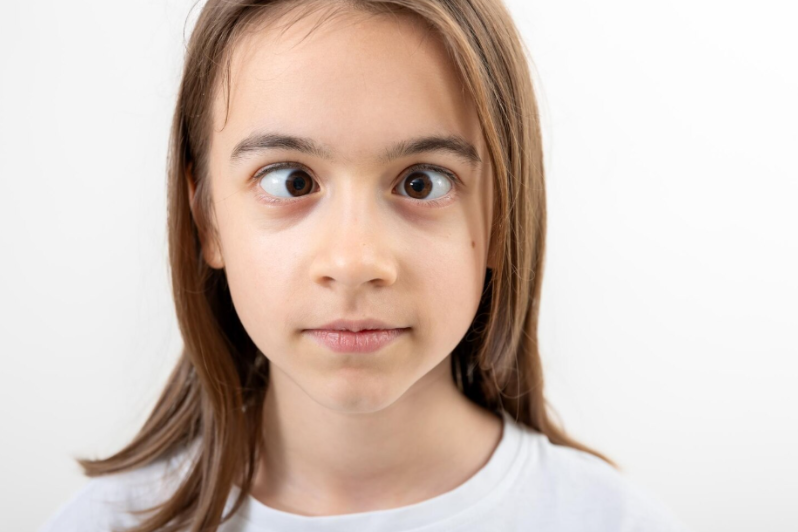
A child’s vision plays a vital role in learning, development, and everyday activities. If you notice one of your child’s eyes turning inward, outward, upward, or downward instead of looking straight ahead, it could be Squint (Strabismus). Many parents assume their child will outgrow this condition, but untreated squint can lead to permanent vision problems such as lazy eye (amblyopia) and poor depth perception.
At NR Vision Eye Care & Laser Center, Hyderabad, our experienced pediatric eye specialists provide comprehensive diagnosis and advanced treatment for squint in children, helping them achieve healthy vision and proper eye alignment. Top Squint Eye Treatment in Hyderabad
What is Squint (Strabismus)?
Squint, medically known as Strabismus, is a condition where both eyes do not align in the same direction. While one eye focuses on an object, the other may turn:
- Inward (Esotropia)
- Outward (Exotropia)
- Upward (Hypertropia)
- Downward (Hypotropia)
The eye turn may be constant or intermittent, affecting one or both eyes. This condition is quite common in children and should be evaluated by a Pediatric Ophthalmologist as early as possible.
Why Early Detection is Important
Children may not realize they have a vision problem because they assume everyone sees the same way they do. If squint is left untreated, the brain may begin ignoring signals from the weaker eye, resulting in:
- Lazy Eye (Amblyopia)
- Permanent vision loss
- Poor binocular vision
- Reduced depth perception
- Learning difficulties
- Lower confidence in social interactions
Early diagnosis significantly improves treatment outcomes and helps preserve normal vision development.
Causes of Squint in Children
Several factors can contribute to squint in children.
1. Genetics
Children with a family history of squint are more likely to develop the condition.
2. Refractive Errors
Uncorrected farsightedness (Hyperopia) can force the eyes to turn inward.
3. Weak Eye Muscles
Poor coordination between the muscles controlling eye movement can result in misalignment.
4. Neurological Conditions
Certain brain or nerve disorders may affect eye muscle control.
5. Premature Birth
Premature babies have a higher risk of developing eye alignment problems.
6. Congenital Eye Disorders
Some babies are born with eye muscle abnormalities or developmental conditions affecting alignment.
Symptoms Parents Should Watch For
Parents should schedule an eye examination if they notice:
- One eye turning inward or outward
- Eyes that do not move together
- Frequent blinking
- Closing one eye in bright sunlight
- Tilting the head while looking at objects
- Double vision (in older children)
- Difficulty focusing
- Poor depth perception
- Frequent headaches
- Poor school performance due to vision problems
Early evaluation is essential if these symptoms persist.
How is Squint Diagnosed?
At NR Vision Eye Care, pediatric eye specialists perform detailed eye examinations using child-friendly techniques.
The evaluation may include:
- Visual acuity testing
- Eye alignment assessment
- Refraction test for glasses
- Eye muscle movement examination
- Dilated eye examination
- Binocular vision assessment
These tests help determine the type and severity of squint and guide the most appropriate treatment plan.
Treatment Options for Squint in Children
Treatment depends on the child’s age, type of squint, and underlying cause.
1. Prescription Glasses
Many children with squint caused by refractive errors improve significantly with corrective spectacles.
Benefits
- Corrects vision
- Reduces eye strain
- Improves eye alignment
2. Lazy Eye (Amblyopia) Treatment
If squint has caused lazy eye, treatment focuses on strengthening the weaker eye.
Methods include:
- Eye patch therapy
- Atropine eye drops
- Vision therapy
3. Vision Therapy
Specialized eye exercises help improve eye coordination and binocular vision in selected cases.
4. Squint Surgery
When glasses or therapy alone cannot correct the misalignment, squint surgery may be recommended.
The procedure adjusts the eye muscles to restore proper alignment and improve cosmetic appearance and binocular vision. Modern squint surgery is safe and commonly performed by pediatric ophthalmologists.
Can Squint Be Prevented?
Not every case can be prevented, but early eye examinations greatly reduce the risk of long-term complications.
Parents should ensure:
- Routine pediatric eye check-ups
- Timely treatment for vision problems
- Proper use of prescribed glasses
- Regular follow-up visits
When Should Parents Visit an Eye Specialist?
Consult a pediatric eye specialist immediately if:
- Your child’s eyes remain misaligned after 3 months of age.
- One eye frequently turns inward or outward.
- Your child tilts their head while looking at objects.
- They complain of blurred or double vision.
- There is a family history of squint or lazy eye.
- Teachers report difficulty reading or focusing in class.
Outlook for Children with Squint
The outlook for children with squint is excellent when diagnosed and treated early. Most children achieve:
- Improved eye alignment
- Better vision
- Enhanced depth perception
- Increased confidence
- Better academic performance
- Long-term eye health
Regular follow-up appointments ensure the treatment continues to support healthy visual development.
Why Choose NR Vision Eye Care & Laser Center?
At NR Vision Eye Care & Laser Center, Hyderabad, we are committed to providing compassionate, advanced, and personalized pediatric eye care.
Our services include:
- Comprehensive Pediatric Eye Care
- Squint (Strabismus) Evaluation
- Lazy Eye (Amblyopia) Treatment
- Advanced Diagnostic Technology
- Customized Treatment Plans
- Squint Surgery
- Regular Vision Monitoring
- Child-Friendly Eye Examination
Our experienced ophthalmologists focus on protecting your child’s vision and ensuring healthy eye development from infancy through adolescence.
Conclusion
Squint (Strabismus) is more than a cosmetic concern—it can affect your child’s vision, learning, and overall development. The good news is that with early diagnosis and the right treatment, most children experience significant improvement and enjoy healthy vision throughout life.
If you notice any signs of eye misalignment, don’t delay. Schedule a comprehensive eye examination with the pediatric eye specialists at NR Vision Eye Care & Laser Center to give your child the best possible start toward a lifetime of clear vision.