

Retinal Lasers vs Injections: Which Treatment Is Right for You?
Vision is one of our most precious senses, and the retina plays a vital role in helping us see clearly. When the retina is affected by diseases such as diabetic retinopathy, retinal vein occlusion, macular edema, or age-related macular degeneration (AMD), timely treatment is essential to prevent permanent vision loss.
Modern ophthalmology offers two highly effective treatment options retinal laser treatment and intravitreal eye injections. While both are designed to protect and preserve vision, they work in different ways and are recommended for different retinal conditions. At NR Vision Eye Care & Laser Center, Hyderabad, experienced retina specialists evaluate each patient’s condition and recommend the most suitable treatment using advanced diagnostic technology.
Understanding the Retina
The retina is the thin, light-sensitive layer located at the back of the eye. It captures incoming light and converts it into signals that are sent to the brain, allowing us to see clearly.
Any damage to the retina can lead to blurred vision, floaters, flashes of light, distorted vision, or even permanent blindness if left untreated. Since many retinal diseases develop without noticeable symptoms in the early stages, regular eye examinations are extremely important.
What Is Retinal Laser Treatment?
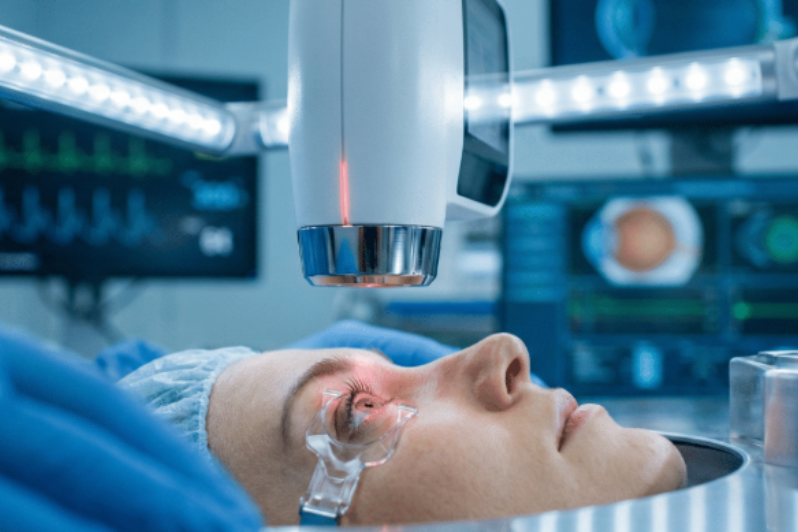
Retinal laser treatment uses a highly focused beam of light to treat damaged areas of the retina. The laser seals leaking blood vessels, prevents abnormal blood vessel growth, and strengthens weak retinal tissue.
The procedure is performed on an outpatient basis and usually takes only a few minutes. Most patients can return home the same day.
Conditions Treated with Retinal Laser
- Diabetic Retinopathy
- Retinal Tears
- Retinal Vein Occlusion
- Proliferative Diabetic Retinopathy
- Selected cases of Macular Edema
Types of Retinal Laser Procedures
1. Laser Photocoagulation
Seals leaking blood vessels and prevents further retinal damage.
2. Panretinal Photocoagulation (PRP)
Treats widespread abnormal blood vessel growth caused by advanced diabetic retinopathy.
3. Focal/Grid Laser
Targets specific leaking blood vessels near the macula.
Benefits of Retinal Laser Treatment
- Helps prevent vision loss
- Reduces retinal bleeding
- Quick outpatient procedure
- Minimal recovery time
- Safe and effective
- Long-term disease control in appropriate patients
What Are Retinal Injections?
Retinal injections, also known as intravitreal injections, involve injecting medication directly into the vitreous cavity of the eye.
Although many patients feel anxious about the procedure, it is performed after numbing the eye with anesthetic drops. The injection takes only a few seconds and is generally well tolerated.
Common Types of Eye Injections
Anti-VEGF Injections
These medications block abnormal blood vessel growth and reduce leakage.
Common medicines include:
- Ranibizumab
- Aflibercept
- Bevacizumab
Steroid Injections
Steroid injections help reduce retinal inflammation and swelling, particularly in persistent macular edema.
Conditions Commonly Treated with Eye Injections
Eye injections are often recommended for:
- Wet Age-Related Macular Degeneration (AMD)
- Diabetic Macular Edema
- Retinal Vein Occlusion
- Macular Swelling
- Certain inflammatory retinal diseases
Which Treatment Is Better?
There is no single treatment that is best for everyone.
Your retina specialist will recommend treatment based on:
- Type of retinal disease
- Severity of the condition
- Amount of retinal swelling
- Presence of abnormal blood vessels
- Overall eye health
- Response to previous treatments
In many cases, laser treatment and injections are used together to achieve the best possible outcome and preserve vision.
What Happens During Treatment?
During Retinal Laser
- Eye drops are used to dilate the pupil.
- Local anesthetic drops numb the eye.
- A specialized laser is applied to the retina.
- The procedure is generally painless.
- Patients usually return home shortly afterward.
During Eye Injection
- The eye is cleaned thoroughly.
- Numbing eye drops are applied.
- Medication is injected into the vitreous.
- The injection itself takes only a few seconds.
- Mild redness or irritation may occur temporarily.
Recovery After Retinal Treatment
Most patients resume normal daily activities within 24 hours.
You may notice:
- Mild irritation
- Slight redness
- Temporary blurred vision
- Mild sensitivity to light
Follow-up visits are essential because many retinal diseases require ongoing monitoring and, in some cases, repeated treatment to maintain vision.
Why Early Treatment Matters
Retinal diseases often progress silently. Waiting until vision becomes severely blurred can reduce the chances of restoring sight.
Seek immediate consultation if you experience:
- Sudden blurred vision
- Floaters
- Flashes of light
- Distorted central vision
- Dark curtain over your vision
- Sudden loss of vision
Early diagnosis and timely treatment can significantly reduce the risk of permanent blindness.
Why Choose NR Vision Eye Care & Laser Center?
At NR Vision Eye Care & Laser Center, Nallagandla, Hyderabad, patients receive comprehensive retinal care using advanced diagnostic equipment and modern treatment techniques.
Our advantages include:
- Experienced Retina Specialists
- Advanced Retinal Imaging (OCT & Fundus Photography)
- Modern Retinal Laser Technology
- Safe Intravitreal Injection Procedures
- Personalized Treatment Plans
- Comprehensive Eye Care Under One Roof
- Compassionate Patient-Centered Care
Whether you require retinal laser treatment, anti-VEGF injections, or advanced management of retinal diseases, our team is committed to preserving your vision with evidence-based care.
Conclusion
Both retinal laser treatment and eye injections have transformed the way retinal diseases are managed. Rather than choosing one over the other, the most effective approach depends on your specific diagnosis and the stage of the disease. Early detection, timely intervention, and regular follow-up with an experienced retina specialist offer the best chance of protecting your eyesight.
If you are experiencing blurred vision, diabetic eye problems, flashes, floaters, or have been diagnosed with a retinal condition, schedule a comprehensive retinal evaluation at NR Vision Eye Care & Laser Center. Prompt treatment today can help safeguard your vision for the future.