

As parents, we celebrate every milestone in our child’s life from their first smile to their first steps. But one important milestone that often gets overlooked is their first eye exam. Many parents assume that if their child isn’t complaining about vision problems, their eyesight must be fine. However, children often don’t realize they have blurry vision because they have never experienced clear vision.
A comprehensive pediatric eye examination helps detect vision problems early, ensuring healthy eye development and better learning outcomes. At NR Vision Eye Care & Laser Center, we believe that early diagnosis and timely treatment can make a lifelong difference in your child’s vision.
Why Are Eye Exams Important for Children?
Vision plays a crucial role in a child’s physical, emotional, and educational development. Nearly 80% of learning happens through vision, making healthy eyesight essential for reading, writing, sports, and overall confidence. Best Eye Hospital in Hyderabad
Unfortunately, many eye conditions develop silently without obvious symptoms. Regular eye checkups help identify problems before they begin affecting your child’s growth and academic performance.
When Should Your Child Have Their First Eye Exam?
Eye care experts recommend the following schedule:
At 6 Months
Your baby’s first comprehensive eye examination should be done around six months of age. During this visit, the eye specialist checks:
- Eye alignment
- Eye movement
- Visual development
- Early congenital eye disorders
- Overall eye health
At 3 Years of Age
Before preschool, another detailed eye examination is recommended to evaluate:
- Visual acuity
- Eye coordination
- Focusing ability
- Depth perception
- Early refractive errors
Before Starting School (5–6 Years)
Before entering school, every child should undergo a complete eye examination to ensure they can clearly see books, classroom boards, and digital screens.
Early detection of vision problems helps improve learning and classroom performance.
Annual Eye Checkups
Once your child starts school, annual eye examinations are highly recommended, especially if they:
- Wear glasses
- Spend significant time on digital devices
- Have a family history of eye diseases
- Experience headaches or eye strain
Signs Your Child May Need an Eye Exam Sooner
Sometimes children don’t express vision problems. Parents should watch for warning signs such as:
- Frequent eye rubbing
- Squinting while watching TV
- Sitting very close to screens
- Holding books too close
- Tilting the head while reading
- Frequent blinking
- Watery or red eyes
- Difficulty concentrating in school
- Complaints of headaches
- Covering one eye while reading
- Poor hand-eye coordination
If you notice any of these symptoms, schedule an eye examination immediately.
Common Eye Problems in Children
Early eye examinations help detect several common childhood eye conditions.
1. Refractive Errors
Children may develop:
- Nearsightedness (Myopia)
- Farsightedness (Hyperopia)
- Astigmatism
These conditions can usually be corrected with properly prescribed glasses.
2. Lazy Eye (Amblyopia)
Amblyopia develops when one eye has weaker vision than the other. Early diagnosis offers the best chance for successful treatment through glasses, patching, or other therapies.
3. Squint (Strabismus)
Misalignment of the eyes can affect depth perception and vision development. Early treatment may involve glasses, exercises, or surgery depending on severity.
4. Eye Allergies
Children frequently experience itchy, watery, or red eyes due to allergies. Proper diagnosis ensures safe and effective treatment.
5. Congenital Eye Disorders
Some babies are born with eye conditions such as congenital cataracts or glaucoma. Early screening helps identify these rare but serious conditions before they impact vision.
What Happens During a Pediatric Eye Exam?
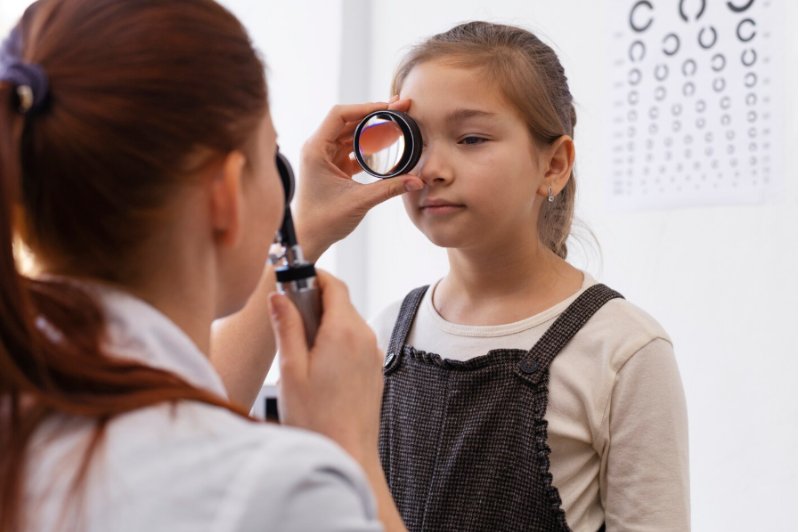
Many parents worry that an eye examination might be uncomfortable for young children. Fortunately, pediatric eye exams are painless and child-friendly.
During the examination, the doctor may assess:
- Visual acuity
- Eye movement
- Eye alignment
- Depth perception
- Focusing ability
- Color vision
- Eye muscle coordination
- Retinal health
- Need for glasses
Special techniques are used for infants and toddlers who cannot yet read letters or communicate clearly.
How Parents Can Protect Their Child’s Eye Health
Besides regular eye examinations, healthy habits support lifelong vision.
Encourage Outdoor Play
Outdoor activities may help reduce the risk of childhood myopia progression.
Limit Screen Time
Follow age-appropriate screen time recommendations and encourage regular breaks using the 20-20-20 rule.
Provide a Healthy Diet
Foods rich in:
- Vitamin A
- Vitamin C
- Vitamin E
- Zinc
- Omega-3 fatty acids
support healthy vision.
Ensure Good Reading Habits
Maintain proper lighting and encourage children to hold books at a comfortable distance.
Wear Protective Eyewear
Children participating in sports should use protective eyewear to prevent eye injuries.
Why Early Eye Exams Matter
Children rarely complain about poor eyesight because they assume everyone sees the world the same way they do.
Untreated vision problems may lead to:
- Poor academic performance
- Difficulty reading
- Reduced concentration
- Delayed development
- Permanent vision loss in severe cases
Early diagnosis allows treatment during the critical years when the visual system is still developing.
Why Choose NR Vision Eye Care & Laser Center?
At NR Vision Eye Care & Laser Center, our experienced pediatric eye specialists provide compassionate, child-friendly eye care using advanced diagnostic technology.
We offer:
- Comprehensive pediatric eye examinations
- Vision screening for infants and children
- Glasses prescription
- Lazy eye (Amblyopia) treatment
- Squint (Strabismus) evaluation and management
- Pediatric eye infection treatment
- Myopia management
- Advanced diagnostic facilities
- Personalized care for every child
Our goal is to ensure your child’s vision develops normally from infancy through adolescence.
Frequently Asked Questions
At what age should my child have their first eye exam?
A comprehensive eye examination is recommended around 6 months of age, followed by another at 3 years, and again before starting school.
Is a school vision screening enough?
No. School screenings can identify some vision issues but do not replace a comprehensive eye examination performed by an eye specialist.
How often should children have eye exams?
School-age children should generally have annual eye examinations, or more frequently if recommended by their eye doctor.
Can children outgrow vision problems?
Some minor issues improve with age, but many conditions such as lazy eye, squint, and refractive errors require early treatment for the best outcomes.
Final Thoughts
Your child’s eyesight plays a vital role in their learning, confidence, and overall development. Scheduling the first eye exam at the right age helps detect hidden vision problems early and ensures your child enjoys healthy vision for years to come.
If you’re looking for expert pediatric eye care, the specialists at NR Vision Eye Care & Laser Center are here to provide comprehensive, compassionate care tailored to your child’s needs.