


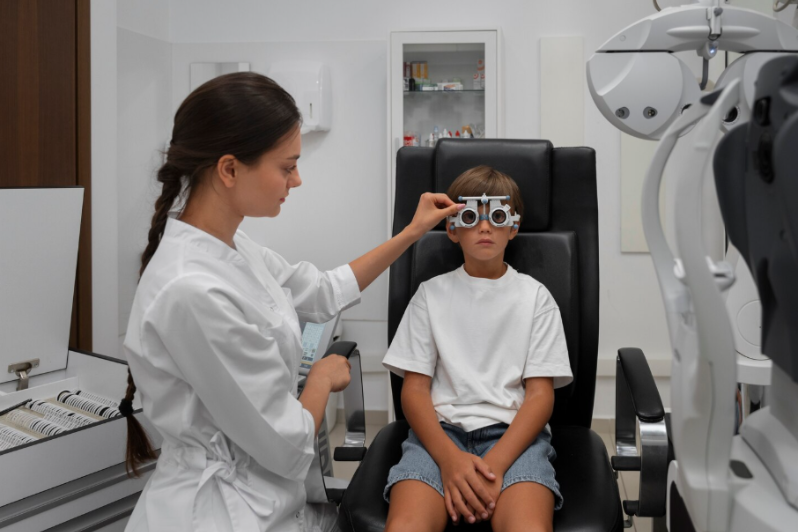
A child’s vision plays a vital role in learning, development, and everyday activities. However, some children may develop a condition called Lazy Eye (Amblyopia) without showing obvious symptoms. Since the condition often develops during early childhood, many parents may not realize there is a problem until vision has already been affected.
The good news is that early diagnosis and treatment can significantly improve vision and prevent permanent vision loss. At NR Vision Eye Care & Laser Center, our pediatric eye specialists provide comprehensive diagnosis and personalized treatment for children with amblyopia using advanced diagnostic technology and child-friendly care. Best Eye Hospital in Hyderabad
What Is Lazy Eye (Amblyopia)?
Lazy Eye, medically known as Amblyopia, is a vision development disorder in which one eye does not develop normal vision. Although the eye itself may appear healthy, the brain begins to rely more on the stronger eye while ignoring visual signals from the weaker eye.
Over time, this lack of stimulation causes the weaker eye’s vision to become poorer. If not treated during childhood, the vision loss may become permanent because the visual system is still developing in the early years of life.
Why Early Treatment Is So Important
The first few years of life are the most important for healthy visual development. During this period, the brain learns how to process images received from both eyes.
When amblyopia is diagnosed and treated early:
- Vision development improves significantly.
- The weaker eye becomes stronger.
- Both eyes learn to work together.
- Depth perception improves.
- The risk of permanent vision loss decreases.
Delaying treatment reduces the chances of achieving normal vision because the brain gradually stops responding to signals from the affected eye. This is why routine pediatric eye examinations are highly recommended.
Common Causes of Lazy Eye
Several eye conditions can lead to amblyopia, including:
1. Squint (Strabismus)
When the eyes are not properly aligned, the brain suppresses the image from one eye to avoid double vision.
2. Refractive Errors
A large difference in the power of both eyes (nearsightedness, farsightedness, or astigmatism) can cause the brain to favor one eye.
3. Cataract or Droopy Eyelid
Anything blocking clear vision during childhood can interfere with normal visual development.
4. Congenital Eye Disorders
Certain eye conditions present from birth may increase the risk of developing lazy eye.
Symptoms Parents Should Watch For
Children often do not realize they have poor vision because the stronger eye compensates. Parents should seek an eye examination if they notice:
- One eye turning inward or outward
- Frequent squinting
- Tilting the head while looking at objects
- Closing one eye while reading
- Poor hand-eye coordination
- Difficulty judging distances
- Sitting too close to the television
- Holding books very close
- Frequent eye rubbing
- Complaints of headaches or eye strain
If your child shows any of these symptoms, schedule an eye examination as early as possible.
How Is Lazy Eye Diagnosed?
A comprehensive pediatric eye examination helps identify amblyopia and its underlying cause.
At NR Vision Eye Care, evaluation may include:
- Visual acuity testing
- Cycloplegic refraction
- Eye alignment assessment
- Slit lamp examination
- Retina evaluation
- Pediatric vision screening
- Orthoptic assessment
These painless and child-friendly tests help doctors determine the most appropriate treatment plan.
Treatment Options for Lazy Eye
Treatment depends on the child’s age, severity, and underlying cause.
Prescription Glasses
Many children require properly prescribed spectacles to correct refractive errors and provide clear vision.
Eye Patching Therapy
The stronger eye is covered with a patch for specific periods so the weaker eye is encouraged to work harder.
Atropine Eye Drops
In selected cases, medicated eye drops are used to temporarily blur the stronger eye and stimulate the weaker eye.
Squint Treatment
If eye misalignment is causing amblyopia, squint treatment or surgery may be recommended.
Vision Therapy
Some children benefit from structured visual exercises that improve eye coordination and strengthen binocular vision.
Early treatment often produces excellent results because the developing brain is more responsive during childhood.
Can Adults Have Lazy Eye?
Although amblyopia is usually diagnosed during childhood, some adults may discover they have the condition later in life.
While treatment outcomes are generally better in children, adults may still benefit from appropriate evaluation and selected treatment options depending on the underlying cause. An ophthalmologist can recommend the most suitable management plan.
Tips to Protect Your Child’s Vision
- Schedule your child’s first eye examination before school age.
- Never ignore eye misalignment.
- Ensure your child wears prescribed glasses regularly.
- Follow patching or medication instructions carefully.
- Attend regular follow-up appointments.
- Encourage healthy visual habits and outdoor activities.
Why Choose NR Vision Eye Care?
At NR Vision Eye Care & Laser Center, Nallagandla, Hyderabad, we provide advanced pediatric eye care with compassionate, child-friendly treatment.
Our advantages include:
- Experienced Pediatric Eye Specialists
- Advanced Diagnostic Equipment
- Personalized Treatment Plans
- Comprehensive Eye Care for Children and Adults
- Squint and Lazy Eye Management
- Modern Eye Care Technology
- Convenient Location Near Gachibowli, Kondapur, and Lingampally
Our goal is to help every child achieve the best possible vision for a brighter future.
Frequently Asked Questions (FAQs)
Can lazy eye be cured?
Yes. When diagnosed early, many children experience significant improvement with appropriate treatment.
What is the best age to treat amblyopia?
Treatment is most effective during early childhood while the visual system is still developing.
Is patching painful?
No. Eye patching is safe and painless but requires consistency for the best results.
Can lazy eye return?
In some cases, regular follow-up is needed to ensure vision remains stable after treatment.
How often should children have eye check-ups?
Routine eye examinations are recommended as advised by your ophthalmologist, especially if there is a family history of eye problems or any vision concerns.
Conclusion
Lazy Eye (Amblyopia) is one of the leading causes of preventable vision loss in children. Because symptoms are often subtle, many children remain undiagnosed until their vision is significantly affected. Early eye examinations, timely diagnosis, and proper treatment can help restore vision and support healthy visual development.
If you notice any signs of vision problems in your child, don’t wait. Early intervention can make a lifelong difference.
Book a pediatric eye examination at NR Vision Eye Care & Laser Center today and give your child the gift of clear, healthy vision.