

As parents, we carefully monitor our children’s growth, nutrition, and education. However, one important aspect that is often overlooked is eye health. Children may not realize they have vision problems because they assume everyone sees the world the same way they do. Undiagnosed vision issues can affect learning, confidence, and overall development. Best Eye Hospital in Hyderabad
At NR Vision Eye Care & Laser Center, we believe that early detection and timely treatment can protect your child’s eyesight and support healthy development. If you notice any unusual changes in your child’s vision or behavior, scheduling a comprehensive eye examination is essential.
Why Regular Eye Checkups Are Important for Children
Nearly 80% of classroom learning depends on vision. Clear eyesight helps children read, write, play sports, recognize faces, and interact confidently with others. Vision problems that remain untreated may lead to learning difficulties, headaches, poor concentration, and permanent vision loss in some cases.
Routine pediatric eye examinations help identify conditions such as:
- Refractive errors (Myopia, Hyperopia, Astigmatism)
- Lazy Eye (Amblyopia)
- Squint (Strabismus)
- Eye allergies and infections
- Congenital eye disorders
- Pediatric cataracts and glaucoma
Many of these conditions can be successfully treated when diagnosed early.
Common Signs Your Child May Need an Eye Checkup
1. Frequent Eye Rubbing
Occasional rubbing is normal, especially when children are tired. However, frequent rubbing without sleepiness may indicate:
- Eye strain
- Allergies
- Dry eyes
- Refractive errors
Persistent eye rubbing deserves an evaluation by an eye specialist.
2. Squinting to See Clearly
If your child frequently squints while watching television or reading the classroom board, it could mean they have difficulty focusing because of refractive errors.
Squinting is often one of the earliest signs that your child may need glasses.
3. Sitting Too Close to the TV or Holding Books Very Close
Children with nearsightedness (myopia) often move closer to screens or books to see clearly.
Watch for behaviors like:
- Sitting close to the television
- Holding mobile phones near the face
- Bringing books unusually close while reading
These are common indicators of vision problems.
4. Frequent Headaches
If your child complains of headaches after reading, studying, or using digital devices, eye strain could be the underlying cause.
Uncorrected vision problems often force children’s eyes to work harder, resulting in headaches and fatigue.
5. Excessive Blinking
Frequent blinking may occur due to:
- Eye irritation
- Dry eyes
- Allergies
- Vision problems
An eye examination helps determine the exact cause.
6. Tilting the Head While Looking
Children sometimes tilt or turn their heads to compensate for poor vision or eye muscle imbalance.
This may indicate:
- Squint (Strabismus)
- Lazy Eye
- Double vision
Early treatment greatly improves outcomes.
7. Difficulty Reading or Poor School Performance
Sometimes children struggle academically not because they have learning difficulties but because they cannot see clearly.
Signs include:
- Losing their place while reading
- Skipping words
- Poor handwriting
- Reduced concentration
- Declining grades
A comprehensive eye examination should always be considered when academic performance suddenly changes.
8. Covering One Eye
If your child covers one eye while reading or watching television, it may indicate:
- Double vision
- Eye alignment issues
- Vision difference between both eyes
This requires prompt evaluation by a pediatric eye specialist.
9. Watery, Red, or Itchy Eyes
Persistent redness, watering, or itching may be caused by:
- Eye allergies
- Eye infections
- Foreign body irritation
Ignoring these symptoms can lead to complications if left untreated.
10. Difficulty Seeing the Blackboard
Teachers are often the first to notice vision problems.
If your child:
- Moves closer to the board
- Complains they cannot read classroom notes
- Frequently copies from classmates
It may be time for a professional eye examination.
Eye Conditions Commonly Found in Children
Myopia (Nearsightedness)
Children can clearly see nearby objects but struggle to see distant objects like classroom boards.
Hyperopia (Farsightedness)
Children may experience headaches, eye strain, or difficulty focusing on nearby objects.
Astigmatism
Astigmatism causes blurred or distorted vision at all distances.
Lazy Eye (Amblyopia)
One eye develops weaker vision than the other.
Without treatment during childhood, vision loss may become permanent.
Squint (Strabismus)
The eyes do not align properly.
Early diagnosis helps preserve binocular vision and depth perception.
When Should Children Have Eye Checkups?
Eye specialists generally recommend:
- At 6 months of age
- Around 3 years
- Before starting school
- Every year during school age
- More frequent checkups if your child wears glasses or has an existing eye condition.
Tips to Protect Your Child’s Vision
Parents can encourage healthy eye habits by:
- Limiting screen time
- Encouraging outdoor activities
- Providing a balanced diet rich in Vitamin A
- Ensuring proper reading distance
- Using adequate lighting while studying
- Scheduling annual eye examinations
- Making children wear prescribed glasses regularly
Healthy daily habits can significantly reduce the risk of long-term vision problems.
Why Choose NR Vision Eye Care & Laser Center?
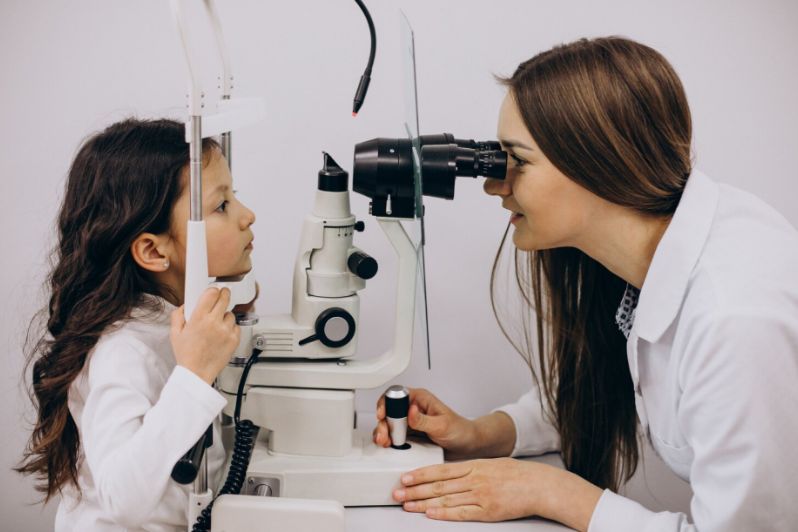
At NR Vision Eye Care & Laser Center, Nallagandla, Hyderabad, we provide comprehensive pediatric eye care using advanced diagnostic technology in a child-friendly environment.
Our services include:
- Pediatric Eye Examination
- Vision Screening
- Glasses Prescription
- Lazy Eye Treatment
- Squint Management
- Pediatric Eye Allergy Treatment
- Myopia Management
- Comprehensive Eye Health Evaluation
Our experienced ophthalmologists focus on early diagnosis, personalized treatment, and compassionate care to help every child achieve healthy vision.
Conclusion
Children often cannot explain that they are experiencing vision problems. Instead, they show subtle signs through their behavior. Recognizing these warning signs early can make a significant difference in your child’s learning, development, and overall quality of life.
If you notice frequent eye rubbing, squinting, headaches, poor school performance, or difficulty seeing clearly, don’t delay. A timely eye examination can detect problems early and provide the right treatment to protect your child’s vision.
Book a comprehensive pediatric eye checkup at NR Vision Eye Care & Laser Center and help your child enjoy a lifetime of healthy eyesight.